


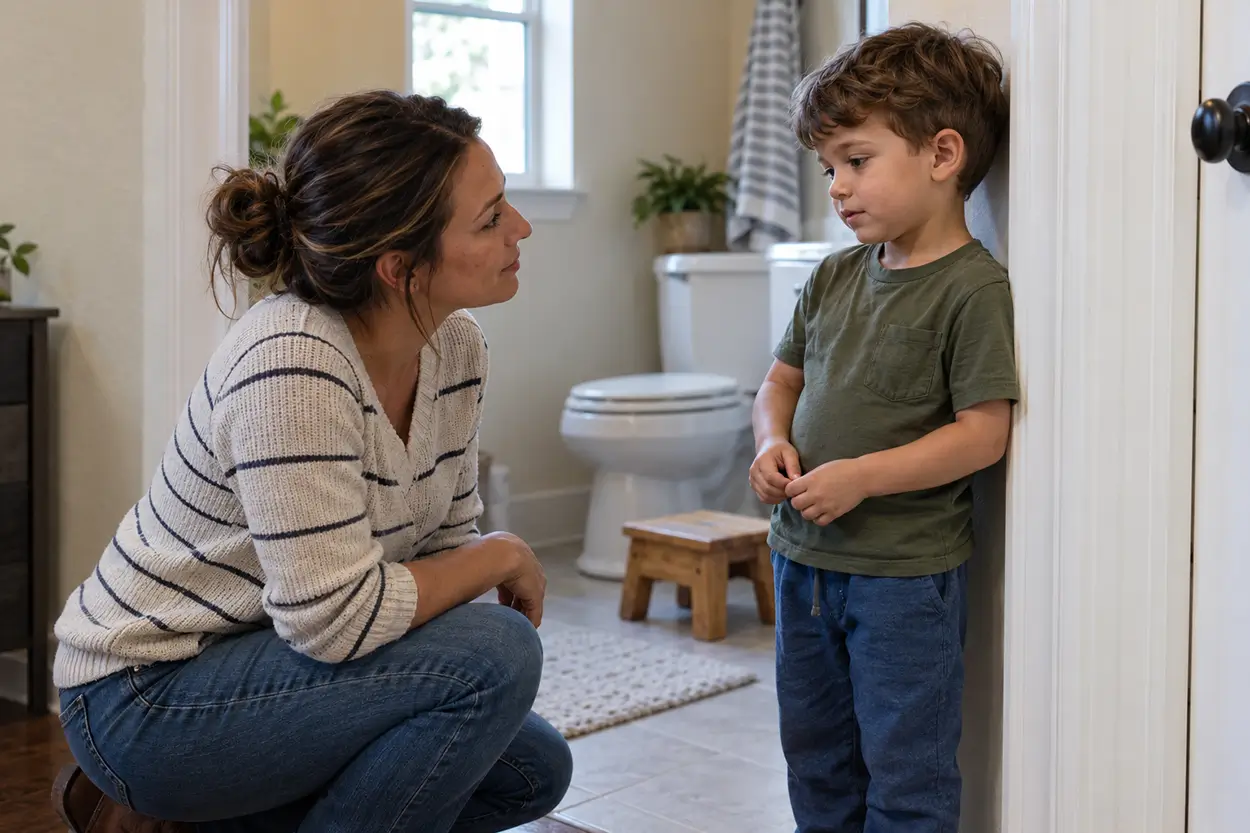
Your child suddenly goes quiet, crosses their legs, and insists they do not need the bathroom. Later, passing a bowel movement hurts, and the next day the same struggle begins again. For a parent, it can be hard to know whether to encourage another try, give the child space, or call the pediatrician. When every bathroom trip starts to feel like a negotiation, understanding what is driving the avoidance matters more than finding a stronger incentive.
Stool withholding in children means holding back a bowel movement rather than letting it pass. It may begin with fear of pain, discomfort about using a toilet, or reluctance to stop playing, but repeated withholding can lead to constipation that needs medical attention.
Withholding Can Look Like Straining
A child who stiffens, stands on tiptoe, or squeezes their legs together may look as though they are trying to push stool out. Those movements can actually be efforts to keep it in. Some children retreat to a corner or hide when they feel the urge, then resist sitting on the toilet.
Look at the bowel movements as well as the behavior. Hard pellets, unusually large stools, pain while pooping, or repeated smears in underwear are useful clues to share with the pediatrician. Passing a little stool does not necessarily mean the bowel has emptied well. With ongoing constipation, softer stool can leak around retained stool, so an accident that looks like diarrhea may need a different explanation.
How Pain Keeps the Cycle Going
One painful bowel movement can make a child afraid of the next one. Holding stool in gives the colon more time to absorb water from it, leaving stool harder and more difficult to pass. That can reinforce the fear, even after the original reason for withholding has changed. The American Academy of Pediatrics describes this withholding cycle as a common part of functional constipation, meaning constipation without an underlying disease causing it. A child caught in that cycle needs help making bowel movements comfortable again, alongside a calmer bathroom routine.
When to Call the Pediatrician
Contact your child’s pediatrician when withholding keeps happening, bowel movements hurt, or stool accidents begin after toilet training. You do not need to wait until your child has gone many days without pooping before asking for help.
Mention whether your child avoids only certain bathrooms, cries before passing stool, or has started eating less because of belly discomfort. These details help the clinician understand how much the problem is affecting daily life. NIDDK advises medical evaluation when constipation symptoms last longer than two weeks or do not improve with home care. That is not a reason to wait two weeks when your child is already hurting or symptoms are worsening.
Constipation accompanied by constant abdominal pain, vomiting, a swollen belly, rectal bleeding, blood in the stool, or unexplained weight loss needs medical attention right away. Do not assume those symptoms are simply part of withholding or try to manage them with another home remedy.
Help Your Child Without Adding Pressure
If you notice your child holding in poop, try to keep the conversation matter-of-fact. Acknowledge that they may be worried it will hurt, and avoid punishment or shame over accidents. For a toilet-trained child, offer a short, unhurried opportunity to sit after a meal, with feet supported on a sturdy stool rather than dangling. Praise cooperation with the routine instead of making success depend on producing a bowel movement.
For a toddler, withholding stool during potty training may be a reason to pause training while the constipation is addressed. An older child may need privacy, enough time, or help arranging access to a comfortable school bathroom. Offer regular fluids and age-appropriate fiber foods, but do not keep adding dietary changes while painful stools and avoidance continue; established constipation may need treatment beyond food and water.
What an Evaluation and Care Plan May Involve
Before the appointment, make a brief record of when your child passes stool, what it looks like, whether it hurts, and when withholding happens. Note accidents, any blood, recent routine changes, and medicines or supplements your child takes. Bring the observations you have rather than delaying care to complete a diary. The pediatrician will review the history and examine your child, including checking the abdomen and considering growth and other symptoms.
Testing is not routinely needed to diagnose childhood constipation. The clinician may recommend additional evaluation when the history, examination, or response to treatment suggests another concern.
A treatment plan may combine bathroom routines with medicine to keep stool soft, and some children first need treatment to clear a buildup of retained stool. Ask for clear instructions about what to use, how long to continue, and when to follow up rather than starting a laxative, suppository, or enema on your own. As the NASPGHAN Foundation’s GiKids resource explains, ongoing treatment helps prevent stool from building up again while the bowel recovers, so one successful bathroom trip does not necessarily mean treatment is finished.
Get Help With the Bathroom Struggle
When fear of pooping keeps returning, a pediatric visit can help you understand what is happening and how to respond. At Pediatricz Now, our team can evaluate your child’s symptoms and recommend appropriate next steps, including follow-up or referral when needed. We provide pediatric care for families in the Houston area, San Antonio, and Corpus Christi. Call your preferred clinic or contact us to discuss recurring withholding, painful bowel movements, or stool accidents.