


An earache can quickly disrupt an ordinary evening. A child who was playing an hour ago may suddenly be crying, refusing dinner, or struggling to sleep. When that happens, parents need more than a list of possible diagnoses. They need to know whether the pain can wait until morning or whether their child should be seen sooner.
Child ear pain is common, but its cause is not always obvious from symptoms alone. The most useful clues are your child’s age, how intense the pain is, whether other symptoms are present, and how your child responds to comfort measures.
When Does Child Ear Pain Need Medical Attention?
If your child develops an earache but has no other concerning symptoms, contact their pediatrician within 24 hours. An ear infection is one possibility, and a clinician needs to examine the eardrum to determine what is happening. If pain begins overnight and your child is comfortable after appropriate pain relief, calling when the office opens is generally reasonable.
Seek an earlier evaluation if the pain worsens, your child has a fever of 102.2°F (39°C) or higher, fluid or pus drains from the ear, or hearing seems reduced. A child with ear symptoms lasting more than two or three days also needs medical assessment, even if the discomfort seems manageable.
Signs That Should Not Wait
Some symptoms call for urgent medical care rather than a routine appointment. Redness or swelling behind the ear, especially if the ear appears pushed outward, needs prompt evaluation. Severe pain that does not improve with appropriate pain medication also requires prompt attention, a stiff neck, new problems walking or balancing, or a child who looks seriously ill.
Seek emergency care if your child is difficult to wake or is not responding normally. A baby younger than three months with a temperature of 100.4°F (38°C) or higher needs immediate medical advice and prompt assessment, whether or not ear pain is obvious. If an object has been pushed deeply into the ear, do not attempt to remove it at home.
What If the Earache Starts at Night?
Nighttime ear pain can feel especially alarming because there may be no appointment available until morning. If your child is alert, breathing comfortably, drinking adequately, and has no warning signs, focus on making them comfortable while arranging a call to the pediatrician when the office opens.
Use an age-appropriate pain reliever such as acetaminophen or ibuprofen only according to the product label and your clinician’s guidance. Ibuprofen is generally not used in babies younger than six months unless a clinician directs it. Applying a comfortably warm or cool washcloth to the outside of the ear may also provide relief. Never give aspirin to a child.
If the pain remains severe despite appropriate medicine, or a new warning sign develops, do not wait for morning. The decision should follow how your child is doing, not simply the time on the clock.
Could It Be an Ear Infection?
Middle ear infections often develop during or after a cold. Swelling can block the small tubes that help drain fluid from behind the eardrum, creating pressure and sometimes infection. Younger children may tug at an ear, wake repeatedly, become unusually fussy, or react less to quiet sounds instead of telling you exactly where it hurts.
Still, not every earache is a middle ear infection. Pain can come from an irritated outer ear canal after swimming, a scratch, trapped wax, a foreign object, or even a sore throat. Ear pulling by itself is not enough to diagnose an infection. That is why an examination matters more than trying to identify the cause from a symptom checklist.
What Will the Pediatrician Check?
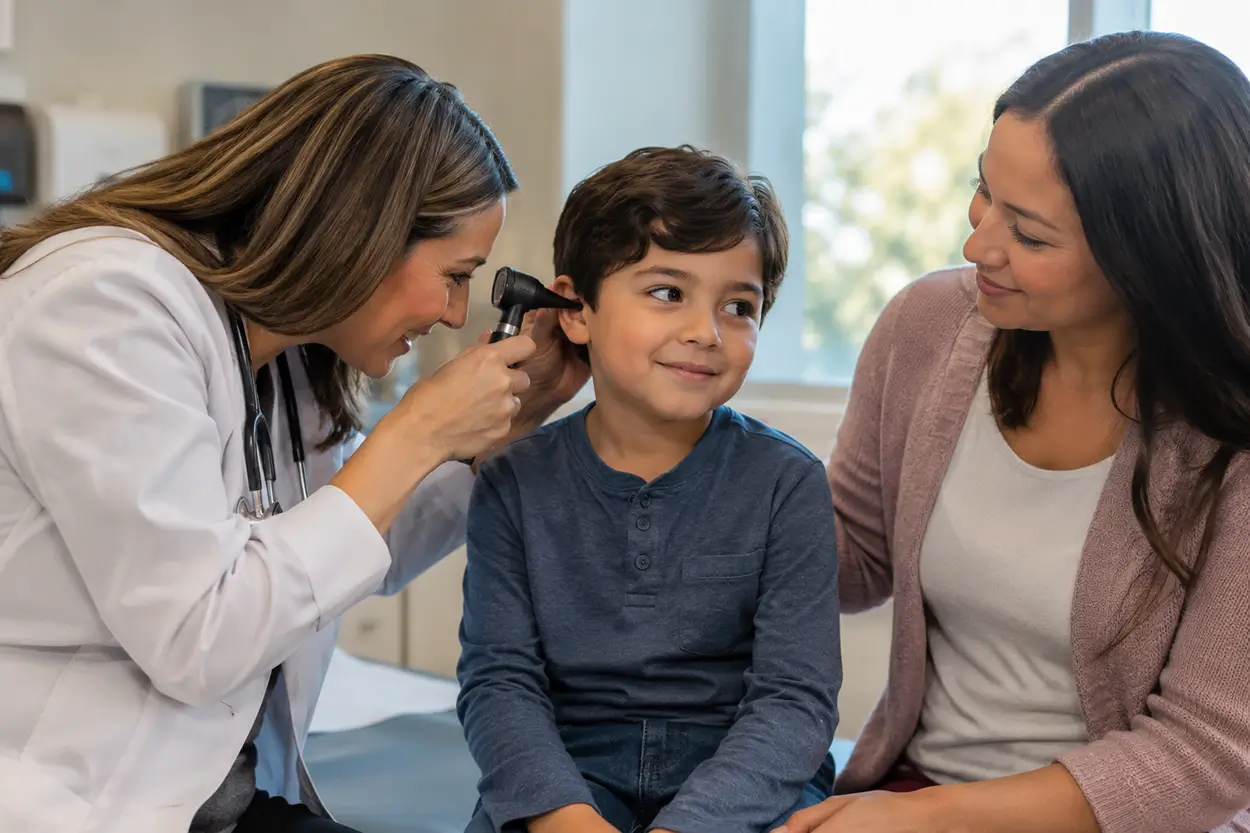
The visit usually begins with a few practical questions: When did the pain start? Was there a recent cold or swimming? Has your child had a fever, ear drainage, difficulty hearing, or previous ear infections? The pediatrician then uses a lighted instrument called an otoscope to look at the ear canal and eardrum.
A bulging eardrum and fluid behind it can support a diagnosis of a middle ear infection. An inflamed outer ear canal may suggest swimmer’s ear instead. The distinction matters because these conditions do not always need the same treatment, and ear drops should not be used without professional guidance when the cause of drainage is uncertain.
Will My Child Need Antibiotics?
Not necessarily. Some middle ear infections improve without antibiotics, especially when symptoms are mild and a clinician determines that careful observation is safe. Depending on the child’s age, the examination, and the severity of symptoms, a pediatrician may recommend monitoring for 48 to 72 hours with a clear follow-up plan.
Other infections need antibiotic treatment sooner. Parents should not have to make that decision on their own, and leftover antibiotics are not a substitute for an examination. Whether antibiotics are prescribed or not, controlling pain and watching for worsening symptoms remain important.
Why Does My Child Have Trouble Hearing After an Ear Infection?
Even after an infection settles, fluid can remain behind the eardrum for a while. Your child may ask you to repeat yourself, turn up the volume, or seem less responsive to soft sounds. Mention these changes to the pediatrician, particularly if they persist or interfere with daily activities.
Recurring earaches or repeated infections also deserve follow-up. The goal is not only to treat the next painful episode but also to determine whether lingering fluid or hearing changes require further evaluation.
Get Help Deciding the Next Step
When your child is dealing with ear pain, knowing what’s causing the discomfort can help you feel more confident about what to do next. At Pediatricz Now, our pediatric team can examine your child’s ears, identify possible causes of pain, and recommend appropriate care based on their symptoms.
Whether the pain started suddenly or hasn’t improved, you don’t have to keep guessing about the next step. Explore our same-day sick visits or visit Pediatricz Now to find a convenient clinic and schedule an appointment.