


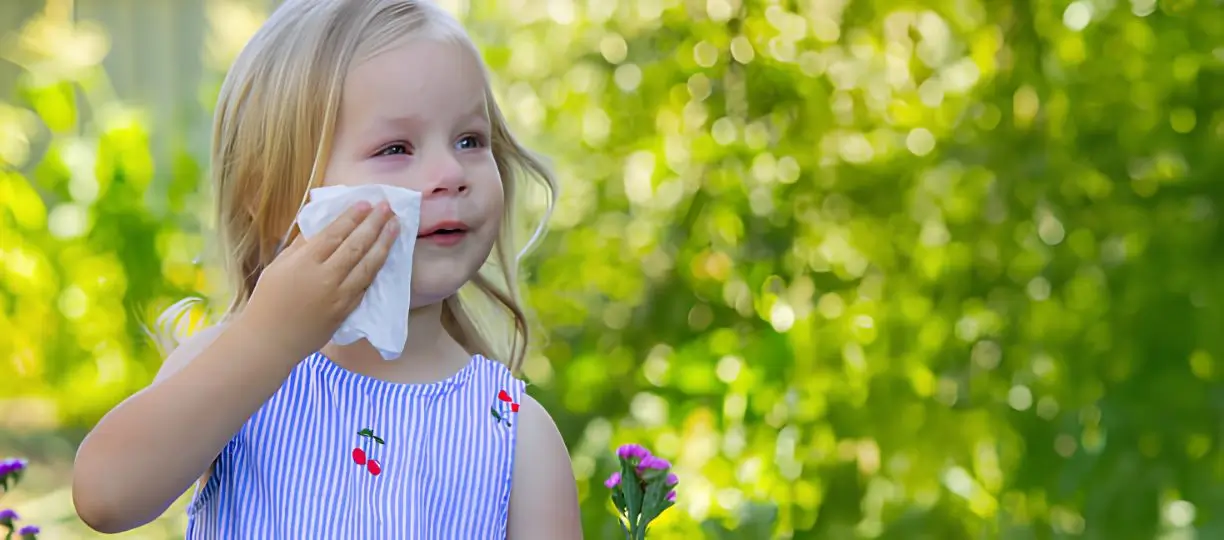
A runny nose, sneezing, watery eyes, and congestion are common in children, especially during certain times of the year. At first, these symptoms are easy to mistake for a cold or temporary irritation.
When the symptoms keep returning, however, pediatric allergies may be the cause.
Allergies in children can appear in different ways depending on the child and the trigger involved. Some children mainly experience nasal congestion and sneezing, while others develop itchy skin, coughing, watery eyes, or recurring seasonal allergy symptoms.
For parents, recognizing the signs of pediatric allergies can make it easier to determine when symptoms are more than a passing illness and when professional evaluation or allergy treatment may be helpful.
Why Allergies Are Common in Children
A child’s immune system is still developing, which can make certain environmental triggers more noticeable.
Pollen, dust mites, mold, pet dander, and grass are some of the most common allergy triggers affecting children. Seasonal allergies in children often become more noticeable during times of the year when pollen counts rise.
When the immune system reacts to these triggers, the body releases chemicals such as histamine. That reaction can lead to congestion, sneezing, itchy eyes, coughing, and other symptoms associated with allergies.
Some children experience mild symptoms occasionally. Others deal with reactions that interfere with sleep, school, outdoor activities, or daily comfort.
Allergies and Colds Can Look Similar
One reason pediatric allergies are sometimes difficult to recognize is that they can resemble common illnesses.
A child with allergies may have congestion, sneezing, or a runny nose that looks very similar to a cold.
One of the biggest differences is how long the symptoms last.
Colds usually improve within a week or two. Allergies often continue as long as the trigger remains present. Symptoms may also appear around the same season every year or become worse after outdoor activities, cleaning, or exposure to pets.
Unlike colds, allergies do not cause viral infections. Fever is also less common with allergies than with illnesses like the flu or a cold.
Common Allergy Symptoms in Kids
Allergy symptoms can affect children in several different ways.
Common allergy symptoms in kids often include:
- Frequent sneezing
- Nasal congestion
- Runny nose
- Itchy or watery eyes
- Coughing
- Postnasal drip
- Skin irritation or rashes
- Dark circles under the eyes
Some children become tired because constant congestion interferes with sleep. Others become irritable simply because they are uncomfortable for long periods.
In some cases, allergies may also contribute to breathing-related symptoms, particularly in children with asthma or other respiratory sensitivities.
When to See a Doctor for Child Allergies
Parents often wonder when to see a doctor for child allergies rather than continuing to manage symptoms at home.
Occasional mild symptoms may improve with basic environmental changes or over-the-counter medications recommended by a pediatrician. However, persistent or worsening symptoms deserve closer evaluation.
A medical evaluation may be helpful if a child experiences:
- Symptoms lasting for weeks at a time
- Frequent congestion or coughing
- Sleep disruption caused by allergy symptoms
- Difficulty participating in normal activities
- Recurring skin irritation
- Symptoms that worsen seasonally each year
- Breathing difficulties or wheezing
Breathing-related symptoms deserve extra attention. Ongoing coughing, wheezing, or shortness of breath should never be ignored.
Understanding Pediatric Allergy Treatment
Pediatric allergy treatment depends on the child’s symptoms, triggers, age, and overall health.
In many cases, treatment begins with reducing exposure to triggers whenever possible. Air filters, regular cleaning, limiting outdoor exposure during high pollen periods, and managing pet dander may help reduce symptoms.
Medication may also be recommended in some situations. Antihistamines, nasal sprays, or other therapies can sometimes improve symptom control.
The goal is not simply to reduce symptoms temporarily. Effective treatment focuses on improving the child’s daily comfort and reducing ongoing irritation that interferes with normal activities.
The Role of Allergy Testing
When symptoms continue despite basic treatment, allergy testing may be recommended.
Testing helps identify specific triggers that may be contributing to symptoms. Understanding the triggers often helps make treatment more targeted and effective.
Some children react strongly to seasonal allergens such as pollen. Others may be more sensitive to indoor allergens like dust mites or mold.
Identifying the source of symptoms can help families make more informed decisions about environmental changes and long-term care.
Helping Children Feel Better Long Term
For many families, managing pediatric allergies becomes part of everyday life.
Some children eventually outgrow certain sensitivities. Others simply need guidance on managing seasonal allergies in children more effectively throughout the year.
The goal is not to eliminate every trigger completely. Instead, it is to help children stay comfortable, active, and able to participate fully in school, sports, sleep, and daily routines without constant irritation.
Pediatric Allergy Care in Houston
If your child is experiencing ongoing pediatric allergies, recurring seasonal allergies, or persistent allergy symptoms, Pediatricz Now Primary Care provides pediatric evaluations and allergy care for families throughout the Houston area.
Our team helps parents recognize when to see a doctor for child allergies, identify possible allergy triggers, and explore pediatric allergy treatment options tailored to each child’s symptoms and health needs.
With personalized care, ongoing support, and a focus on long-term wellness, we help children manage allergy symptoms and stay more comfortable throughout the year.
Schedule an appointment with Pediatricz Now Primary Care today to get answers, identify potential allergy triggers, and help your child find lasting relief from allergy symptoms.